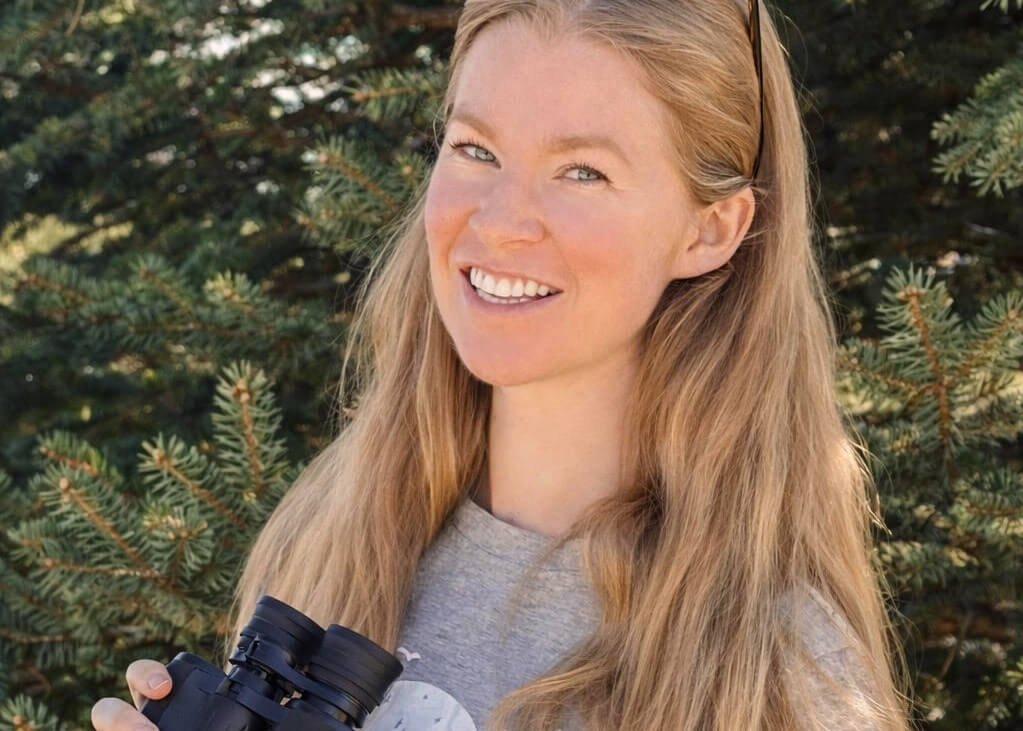
Allie has been a proud bird nerd for as long as she can remember. Much of her birding story took shape along the shore of Lake Superior in Wisconsin and Minnesota, where long mornings in spruce forests and along rocky shorelines taught her the rhythms of wind, water, and migration. She knows the local birds the way some people know their neighbors: who arrives early in spring, who sings before sunrise, and which shy thrush is hiding just out of sight in the alders. Years spent wandering the Northwoods gave her an instinct for finding birds that blends science, patience, and a little bit of “there has to be something good in that tree.”
Her path has always mixed curiosity with conservation. As an undergraduate, she pioneered a kestrel conservation project, banding more than 200 nestlings and installing over 50 nest boxes to support populations of the tiny but fierce American Kestrel. While earning her master’s degree in Rangeland Ornithology at Texas A&M University, Allie taught ornithology and helped students discover that birds are far more interesting than most people realize. After earning her PhD in Wildlife Ecology from Colorado State University, Allie now works as a wildlife biologist developing practical solutions to human-bird conflict. In other words, she spends her days helping birds and people coexist without ruffling too many feathers.
On a bird walk, Allie brings the same mix of science, storytelling, and genuine excitement that first pulled her into birding. She loves helping people notice the details they might otherwise miss: the quick wing flick of a warbler, the silhouette of a hawk riding a thermal, or the quiet call that reveals a hidden bird in the forest. Expect a few bird puns, a lot of enthusiasm, and the occasional moment when Allie suddenly freezes on the trail and whispers, “Wait… do you hear that?” Whether you’re brand new to birding or already a fellow feather-spotting enthusiast, Allie is always happy to welcome another person into the flock.